
Trump Moves AI Deeper Into National Security, With Guardrails and Open Questions
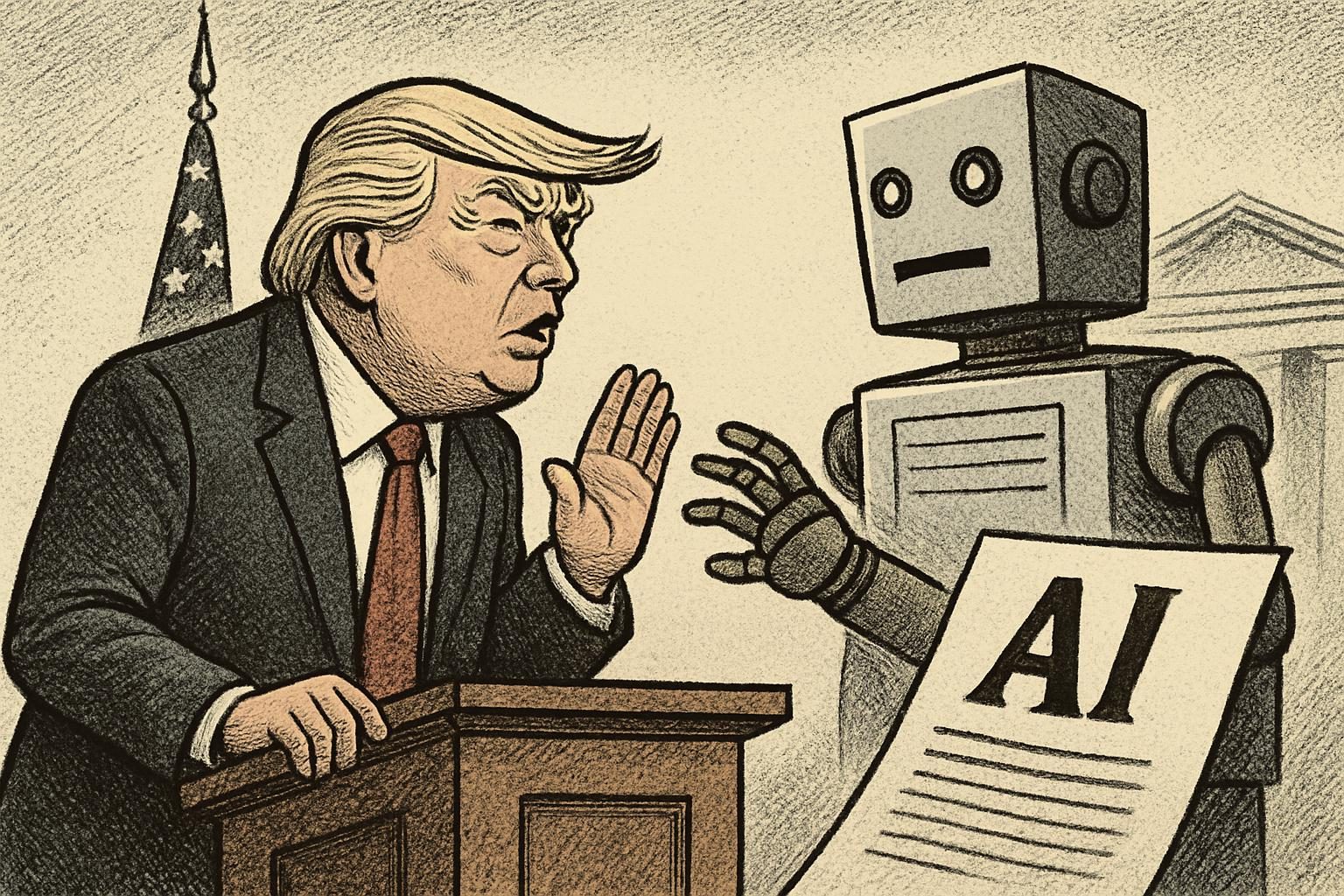
President Donald Trump’s June 5 memorandum on artificial intelligence in the national security enterprise pushes federal agencies to speed up AI adoption inside defense and intelligence work. The order says AI can help protect warfighters, support time-sensitive missions, and preserve U.S. technical overmatch. It also tells the national-security bureaucracy to streamline acquisition and deployment, work with industry and academia, and make sure the talent needed to use these systems is available across the enterprise. That is a meaningful policy directive: the government is treating AI less like an experiment and more like operational infrastructure.
The memorandum also tries to pair speed with control. It says adopted systems should be reliable, robust, steerable, and controllable, and it bars the national-security enterprise from using AI to censor speech, embed ideological bias, or carry out unauthorized surveillance. Commanders, directors, and agency heads remain responsible for those obligations. In practice, the document is an attempt to accelerate use while keeping accountability attached to the chain of command.
Separate from that memo, Trump signed a June 2 executive order on advanced AI innovation and security. That order directs agencies to facilitate access to cybersecurity tools and services, including, where appropriate, covered frontier models, for federal agencies, state and local authorities, and operators of critical infrastructure such as rural hospitals, community banks, and local utilities. It also calls for an AI cybersecurity clearinghouse to work in voluntary collaboration with industry and critical-infrastructure operators.
The June 2 order is not a licensing system. It says outright that nothing in the section authorizes a mandatory governmental licensing, preclearance, or permitting requirement for the development, publication, release, or distribution of new AI models, including frontier models. It also sets up a voluntary framework under which developers can ask the government to assess whether a model meets the covered-frontier threshold and, in some cases, provide federal access for up to 30 days before release to other trusted partners.
Taken together, the two actions show the administration moving to normalize AI in both national security and cybersecurity policy at the same time. The White House is betting that broader access, faster deployment, and tighter operational controls can move together. Whether agencies can actually keep up with that pace is a separate question. The documents promise oversight, testing, and accountability. They do not prove those safeguards will hold once these systems are pushed into sensitive, high-stakes workflows.
Comments
Threaded replies, voting, and reports are live. New users still go through screening on their first approved comments.
Log in to comment
No comments yet. Be the first reasonably on-topic person here.