
Supreme Court denies stay in Cook case, leaving injunction in place
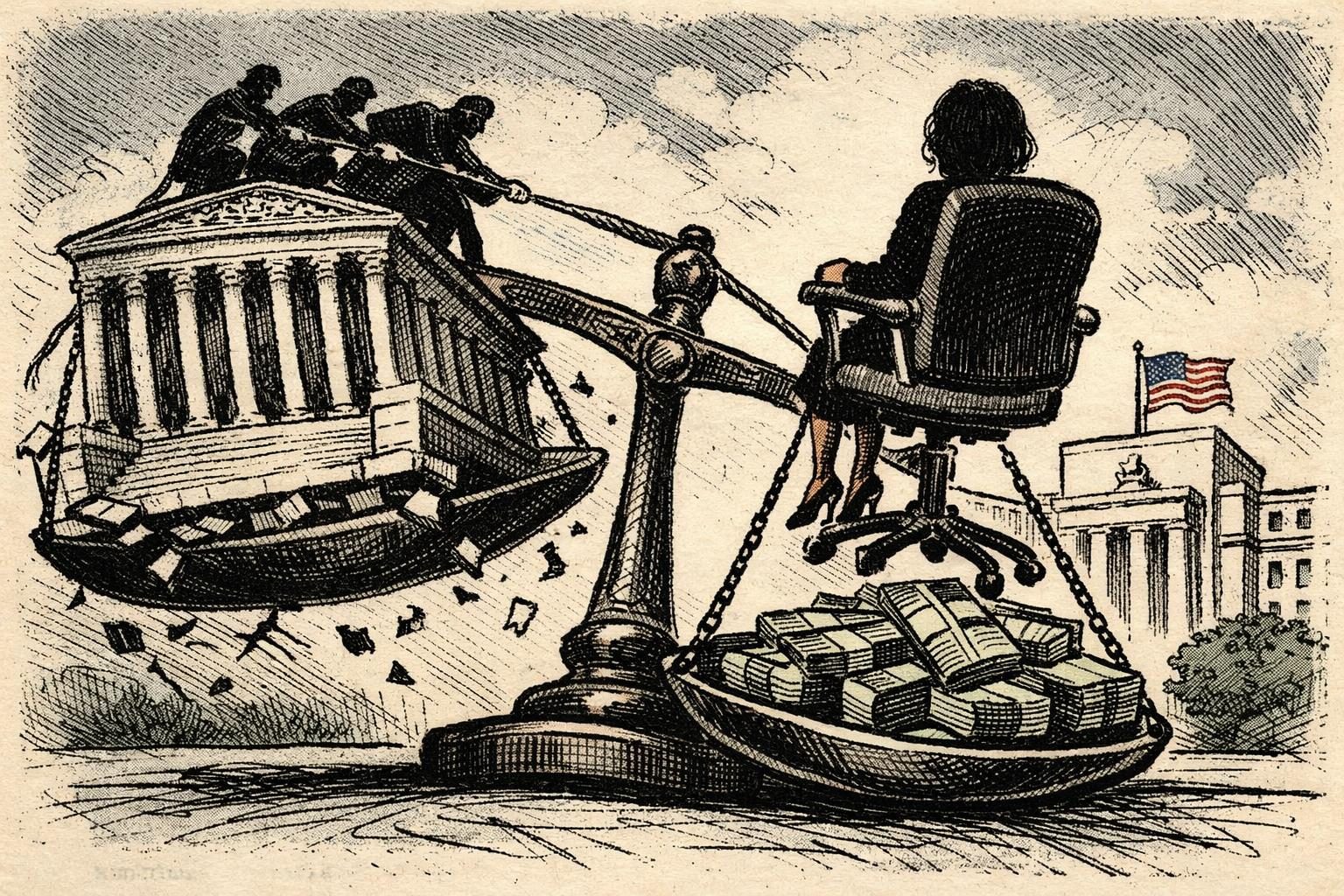
The Supreme Court on June 29 declined to step in and freeze a lower-court injunction in Trump v. Cook, leaving Federal Reserve governor Lisa Cook in place while the broader fight over her removal continues. The order was narrow, procedural, and temporary, but it still mattered. For now, the government does not get the immediate relief it sought, and the status quo remains intact. That means Cook stays on the Board of Governors while the courts continue sorting out whether President Donald Trump can lawfully remove her at all. The justices did not resolve the merits of the dispute, and they did not endorse either side’s ultimate reading of the law. What they did was refuse to let the administration turn a contested firing into a settled fact before the underlying litigation is finished.
That distinction is more than legal housekeeping. Emergency applications are where presidents often try to accelerate reality, using fast-moving procedural requests to get the practical result they want before the judiciary can catch up. A stay can sometimes do that work quietly, by suspending a lower-court ruling long enough for the removal to take effect. The Court’s refusal here suggests the government did not make the kind of showing that typically persuades the justices to intervene immediately. The order focused on the procedural protections Cook was entitled to under the statute, rather than issuing a broad statement about presidential authority over the Federal Reserve. In other words, this was not a final judgment about executive power, but it was still a meaningful refusal to hand the White House an early win. For an administration trying to move quickly, that delay is its own kind of defeat.
Cook’s case has drawn unusual attention because the stakes are bigger than one official’s seat. Her term on the Board of Governors runs until 2038, which underscores how long-lasting any successful removal would be. Trump purported to fire her in August 2025, citing mortgage-fraud allegations, and Cook responded by suing to block the move. A district court issued a preliminary injunction, and the appeals court declined to pause that order before the issue reached the Supreme Court. That procedural path matters because it shows how the legal system can slow a president who wants to act first and litigate later. It also highlights how much depends on interim rulings in cases involving independent agencies and institutions. Even before there is a final answer, the temporary orders can determine who remains in office, who controls policy, and whether a president’s action has any immediate effect at all. In this case, the injunction is still doing the work it was designed to do.
The broader political and institutional question is whether the White House can continue treating the Federal Reserve like any other part of the executive branch. The Fed has long been structured to resist direct political pressure, because monetary policy is supposed to be insulated from short-term demands and partisan advantage. Congress built those protections for a reason, and the Court’s refusal to grant a stay does not alter them. But the fight itself is a reminder that those protections are only as strong as the legal rules that enforce them. If a president can remove a Fed governor whenever the political winds shift, then independence starts to look less like a binding design and more like a decorative principle. The Court has not answered that question yet, and it may not answer it in this procedural order at all. For now, it has simply made clear that the administration does not get to skip ahead. The case remains alive, the injunction remains in place, and the larger struggle over presidential pressure on the central bank is still open.
Comments
Threaded replies, voting, and reports are live. New users still go through screening on their first approved comments.
Log in to comment
No comments yet. Be the first reasonably on-topic person here.