Story · July 22, 2026

The administration’s denaturalization push is getting broader — and more legally fraught

Citizenship purge Confidence 4/5
★★★☆☆Fuckup rating 3/5
Major mess Ranked from 1 to 5 stars based on the scale of the screwup and fallout.
Correction: Correction: this DOJ announcement was made on July 10, 2026, not on July 22, 2026. This story has been updated to reflect the correct date of the denaturalization actions.
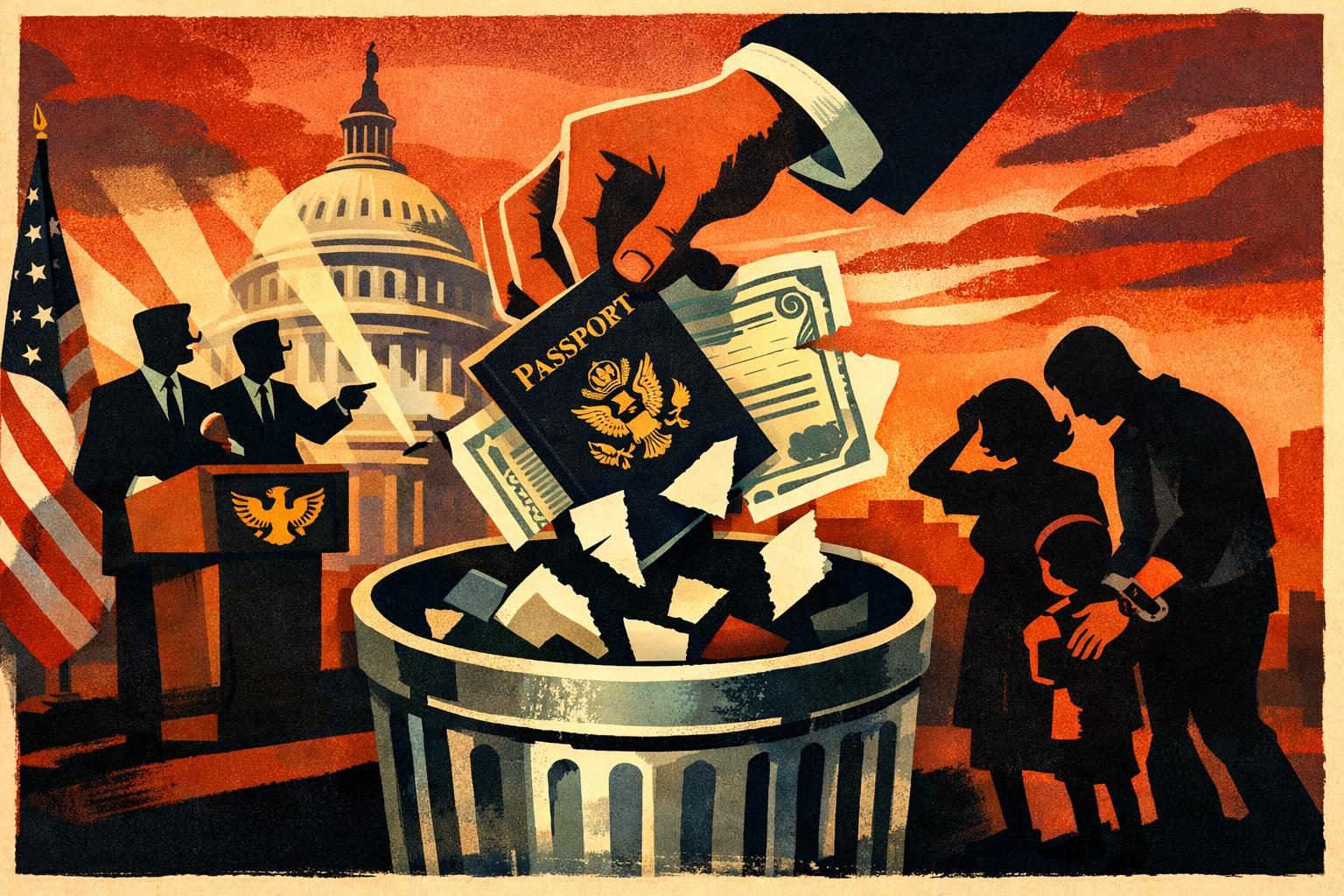
The administration’s denaturalization push is getting broader — and more legally fraught reader image
Reader image selected by automatic review and community voting.

The Justice Department used the latest news cycle to announce another round of denaturalization actions, saying it had filed complaints seeking to strip citizenship from ten naturalized U.S. citizens accused of serious crimes that include child sexual abuse, wire fraud, narcotics trafficking, and other offenses. According to the department, the cases hinge on allegations that the individuals lied or made material misrepresentations during the naturalization process. The administration is presenting the effort as part of a broader push to restore integrity to U.S. citizenship and to pursue people who obtained it through fraud or deception. Few people are likely to object to the basic proposition that naturalization is supposed to be honest and lawful. But the larger significance of the announcement is not simply that the government is taking action in serious cases. It is that the administration is advertising those actions in a way that makes the campaign look less like a targeted legal remedy and more like a political project designed to signal force.

That distinction matters because denaturalization is not an ordinary enforcement tool. Citizenship is among the most consequential legal statuses the government can affect, and the process for revoking it is supposed to be narrow, individualized, and anchored in strong evidence. Even where the government has a plausible case, courts are meant to scrutinize the record carefully, because mistakes in this arena can carry irreversible consequences. The administration’s rhetoric, however, tends to flatten those nuances. Rather than treating each complaint as a case-specific allegation that still has to be proven, it presents the filings as if the act of bringing them is itself evidence of a larger cleansing operation. That style may be attractive to a political audience that likes hard-line immigration messaging and a moralistic view of citizenship. It is much less reassuring to anyone concerned with due process, restraint, and the basic idea that the government should not talk as though it is purging the population by mood and slogan.

The Justice Department has described the effort in sweeping terms, including language about a “largest denaturalization effort ever,” which is exactly the kind of branding that invites scrutiny. Supporters of the campaign will argue that the government is simply being candid about a serious problem, and that anyone who lied their way into citizenship should not be protected from the consequences. That argument has force, especially in cases involving violent crimes or clear fraud. But the administration’s presentation still raises questions about whether the political theater is outpacing the legal work. If the goal is to demonstrate that the government can identify and pursue people who obtained citizenship unlawfully, then the cases themselves should be enough. When officials lean heavily on sweeping language about fraud, contamination, and restoration, they create the impression that the point is not only enforcement but also spectacle. That, in turn, can make it harder to separate legitimate casework from broader efforts to turn immigration and citizenship policy into a rolling morality play.

There is also a practical reason the tone matters: the more the campaign sounds like a purge, the easier it becomes for critics to argue that the administration is normalizing an extraordinary power. Denaturalization is legally permitted, but it is not supposed to be casual, expansive, or driven by political need for a dramatic headline. If the White House wants the public to see these cases as sober enforcement, it has to act like it. Instead, the messaging often sounds like a performance of toughness meant to reassure supporters that the administration is punishing the unworthy and defending the nation from contamination. That posture may be useful in the short term, especially for a president who frequently frames immigration enforcement as a test of national will. But it also increases the risk of skepticism about selective enforcement, overreach, and whether the government is pushing the limits of what the law actually allows. The legal cases may be serious. The administration’s decision to package them as an ideological campaign is what gives the whole effort a more brittle and more legally fraught feel.

The political fallout is unlikely to arrive in a single dramatic moment. It will accumulate instead, as more people come to view the Justice Department not as a neutral enforcer of citizenship law but as an instrument of intimidation and branding. That perception is especially potent when the government attaches its toughest rhetoric to cases involving the most sensitive civic status the United States confers. It also feeds a broader concern that extraordinary remedies are becoming easier for the executive branch to sell whenever ordinary enforcement would be less dramatic. None of that means the individual allegations should be dismissed or that the government should ignore fraud where it can prove it. It does mean the administration is taking a risk by acting as though the publicity around denaturalization is part of the accomplishment. If the cases are strong, they should stand on their own. If they need constant applause, then the public is entitled to wonder whether the point is law enforcement, political theater, or some unsettling mix of both.

Support the work

Help keep this site going

If this story was useful, help support The Daily Fuckup. Reader donations help pay for hosting, archives, publishing, email, and AI costs.

Donate

Reader action

What can you do about this?

Call or write your members of Congress and tell them the exact outcome you want. Ask for a written response and refer to the bill, hearing, committee fight, or vote tied to this story.

Timing: Before the next committee hearing or floor vote.

This card only appears on stories where there is a concrete, lawful, worthwhile step a reader can actually take.

Reader images

Upload a relevant meme, screenshot, or photo. Automatic review rejects spam, ads, and unrelated junk. The top-rated approved image becomes the story's main image.

Log in to upload and vote on story images.

The administration’s denaturalization push is getting broader — and more legally fraught reader image 1
Score: 95 AI / 0 community
By: mike
Current main image

Comments

Threaded replies, voting, and reports are live. New users still go through screening on their first approved comments.

Log in to comment


No comments yet. Be the first reasonably on-topic person here.