
Trump sets August 19 start date for new Canada tariffs
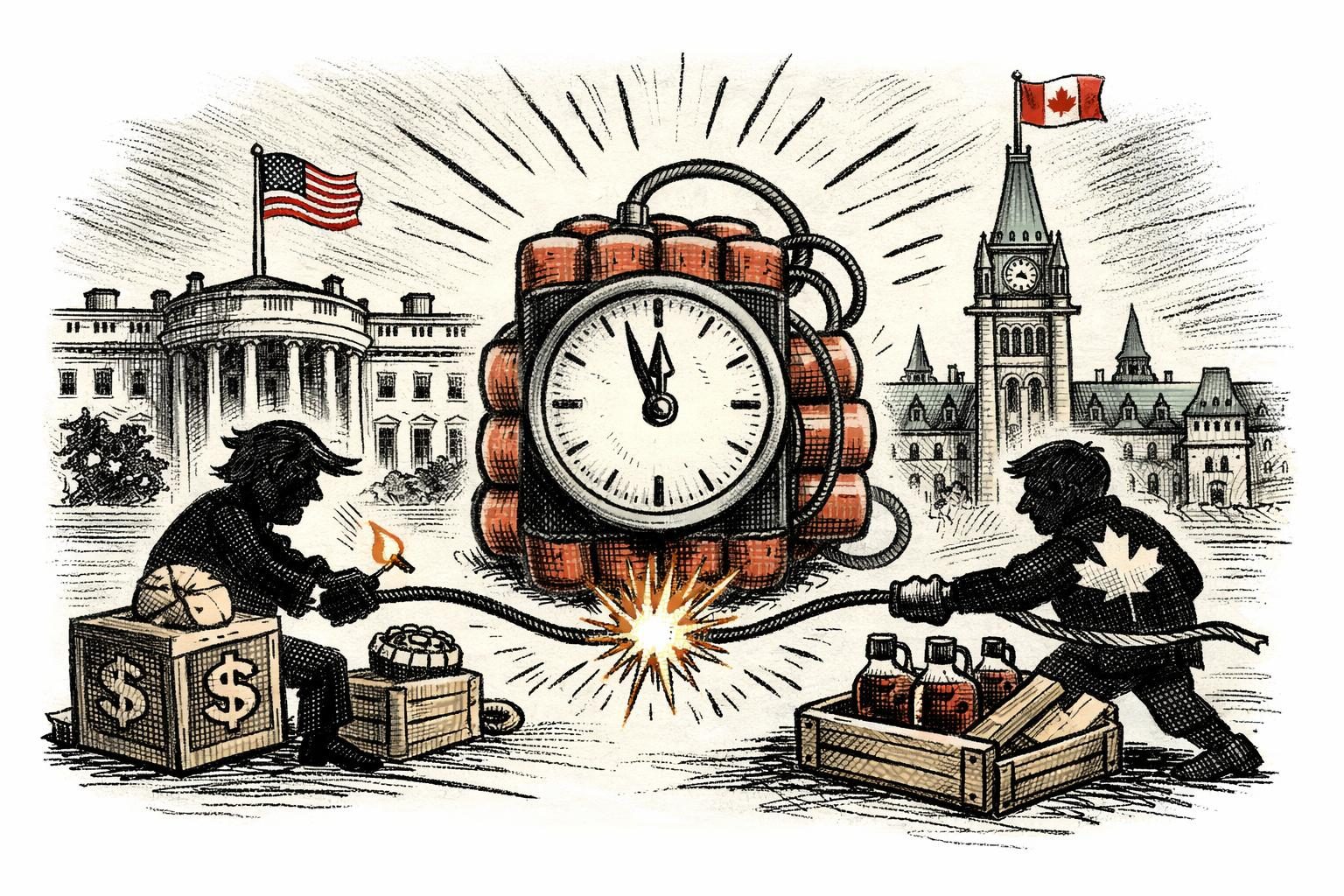
President Donald Trump has put a calendar date on his latest tariff escalation against Canada, converting a broad threat into a scheduled policy event with a specific clock attached to it. Three proclamations issued July 20 under Section 338 impose additional 50% duties on selected Canadian motor vehicles, alcoholic beverages and dairy products, and the White House has said the measures will begin at 12:01 a.m. Eastern on August 19, 2026. That gives businesses only a short runway to adjust shipments, pricing, contracts and inventories before the duties take hold. In trade disputes, the period between announcement and enforcement can be almost as disruptive as the tariff itself because companies are forced to make decisions on incomplete information. Here, the administration has given importers a deadline and then asked them to absorb the consequences of a policy shift that could hit supply chains quickly and unevenly.
The White House is casting the move as retaliation for what it describes as Canadian discrimination against U.S. commerce, rather than as a sweeping tariff campaign aimed at Canadian goods in general. That framing matters because it narrows the formal target list and gives the administration a more defensible rationale than a blanket import tax would provide, at least in political and legal terms. Still, the substance of the action is straightforward: the United States is targeting specific sectors with a steep penalty designed to raise costs and force a response. A 50% duty is not a minor adjustment, and it is not the kind of tariff businesses can usually absorb quietly without changing behavior somewhere along the chain. The White House appears to be signaling that it wants leverage, not symbolism, and the chosen sectors suggest a strategy built around products where disruption will be felt quickly. Whether that pressure produces concessions, retaliation or a drawn-out standoff remains unclear, but the administration has made the stakes unmistakable.
The industries caught in the order are especially exposed because they depend on predictability, cross-border coordination and tight margins. Motor vehicles are the clearest example, since modern auto production regularly moves parts and components back and forth between the United States and Canada before a finished vehicle reaches a dealer lot. A tariff at one stage in that process can reverberate through the rest of the chain, affecting suppliers, assemblers, dealers and ultimately consumers who may see higher prices or delayed deliveries. Alcoholic beverages face a different kind of pressure, but the effect can still be rapid because import costs flow through distributors, wholesalers and retailers with limited room to absorb a major jump. Dairy products are often even more sensitive to sudden changes because processors and grocery buyers work on short time horizons and narrow margins, leaving little cushion if duties arrive overnight. Companies in all three sectors now have to decide whether to accelerate shipments before the deadline, pass along costs, eat the margin hit or rework sourcing plans in a hurry. None of those options is painless, and none of them guarantees that the economic burden will land where the administration says it should.
The broader problem is that trade uncertainty starts long before the first duty is collected, and this announcement creates exactly that kind of uncertainty. Businesses making procurement, staffing and investment decisions do not just respond to tariffs after they are in place; they also react to the possibility that a rule change is imminent and that the next move may come with little warning. That can freeze orders, delay contracts and complicate planning even before the effective date arrives. Ottawa is not likely to greet the move warmly, and Canadian officials have already signaled that they view the action as unwelcome, which suggests the potential for a counterresponse or other pushback once the policy is fully in motion. U.S. industry groups tied to cross-border commerce are also likely to complain as August 19 approaches and the costs become easier to calculate. The administration may describe the tariffs as a fairness measure, but for companies and workers on both sides of the border, the practical effect is more cost, more instability and less confidence in a trading relationship that is deeply intertwined. If the intent is to create negotiating leverage, it may do that; if the test is whether it reduces friction, the early signs point in the opposite direction.
Comments
Threaded replies, voting, and reports are live. New users still go through screening on their first approved comments.
Log in to comment
No comments yet. Be the first reasonably on-topic person here.