Story · August 1, 2026

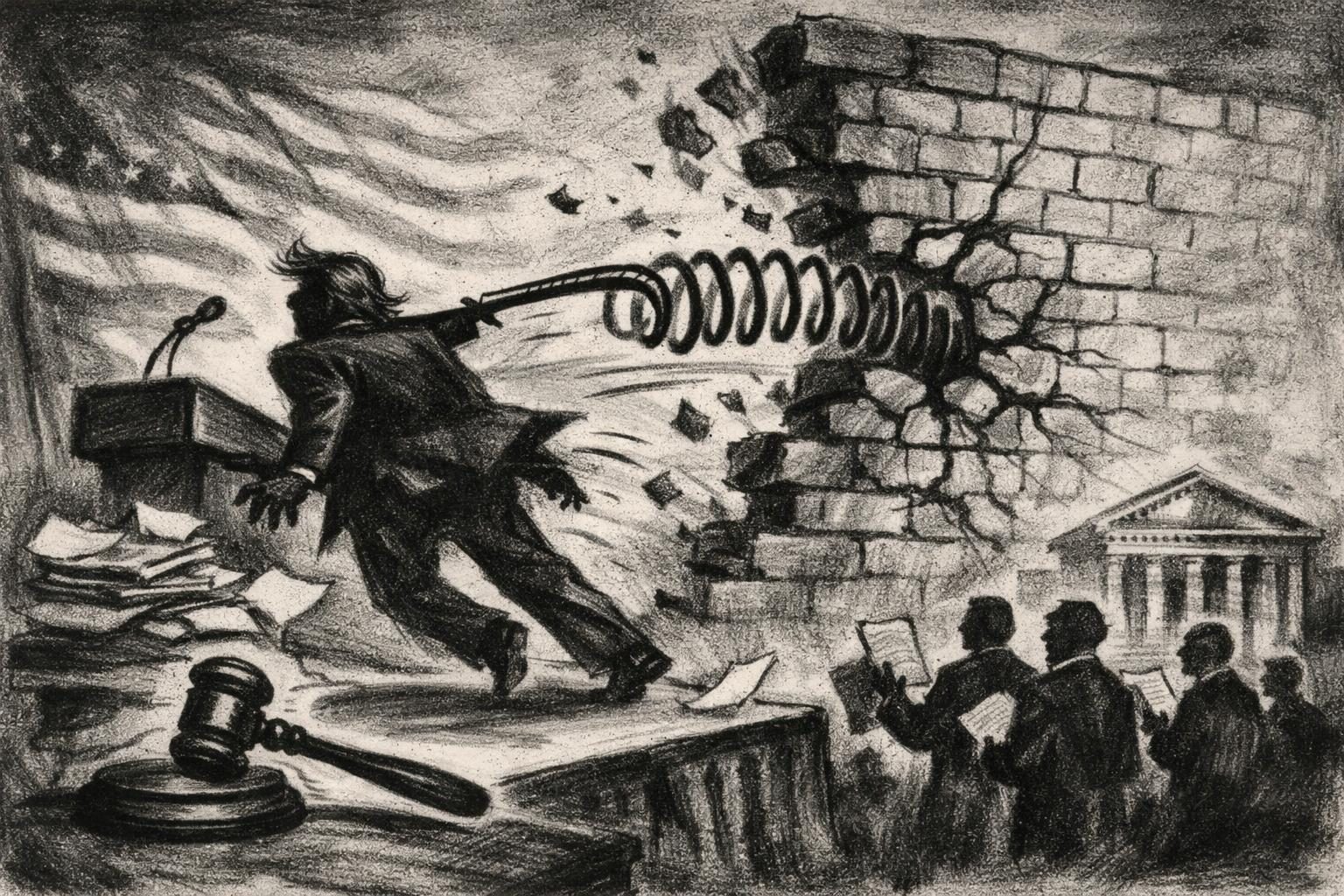
Trump’s tariff blitz hit the wall again

Tariff whiplash Confidence 4/5
★★★★☆Fuckup rating 4/5
Serious fuckup Ranked from 1 to 5 stars based on the scale of the screwup and fallout.
Correction: Correction: President Trump imposed additional 50% tariffs on certain Canadian goods on July 20, 2026, under Section 338 of the Tariff Act of 1930. This story has been updated to better reflect the specific scope and legal basis of the action.
Trump’s tariff blitz hit the wall again reader image
Reader image selected by automatic review and community voting.

President Trump closed out July with another familiar move: more tariffs, more bravado, and more evidence that the administration’s trade strategy is built on escalation first and cleanup later. Official trade notices show the White House and the Office of the U.S. Trade Representative continuing to expand a tariff regime justified through emergency-style claims, statutory authority, and a steady stream of directives that keep the policy in motion. One of the most prominent recent steps targeted Canada, underscoring that the president’s tariff campaign is not a narrow bargaining tactic anymore but a broader governing habit. The administration keeps describing these actions as leverage, reciprocity, and national defense, but the practical effect is a widening ring of uncertainty around businesses that have to import, ship, price, and plan. The more frequently the government has to announce, amend, explain, and carve out exceptions, the less this looks like a confident doctrine and the more it resembles improvisation dressed up as strategy. That distinction matters, because tariffs do not live on slogans alone. They land in supply chains, payrolls, inventories, and legal filings.

The White House’s latest tariff push also reinforces how much this policy depends on constant administrative maintenance. The government’s own materials make clear that the tariff regime is not a one-and-done measure but a rolling project that keeps expanding through new proclamations, technical guidance, and changes to the scope of covered imports. That matters because businesses do not operate on political adrenaline. They need stable rules, predictable costs, and enough lead time to decide whether to reroute sourcing, absorb losses, pass along price increases, or slow investment until the dust settles. Instead, they are getting a moving target. Importers have to make decisions before they know whether a duty will hold, change, or be replaced by another legal theory next week. Foreign governments are left to interpret each fresh move as either an opening bid or a hostile act. Consumers, meanwhile, are the ones most likely to discover that tariffs are not free just because the administration talks about them as punishment for someone else. When the White House insists the policy is carefully calibrated, it is asking a lot of everyone else to ignore the amount of recalibration required to keep it standing.

The legal exposure is just as important as the economic one. Tariffs built on broad emergency claims or expansive readings of trade authority invite challenge, and the record around Trump’s trade war still shows the policy being litigated, contested, and scrutinized in court materials and filings. That does not automatically mean the White House will lose every fight, but it does mean the administration is operating in a space where the law is not settled and where each new tariff action risks becoming another exhibit in a larger argument over presidential power. That is one reason the tariff blitz keeps generating blowback even when it appears to score a political point. The administration is not just trying to change prices; it is also trying to redefine how far executive power can stretch before courts or Congress push back. Those are different contests, and the White House keeps acting as if winning one means winning the other. It does not. A tariff regime can be politically loud and still legally fragile. It can also be operationally disruptive without ever producing the clean strategic advantage the president promises. The fact that the government keeps issuing fresh notices while lawsuits and challenges remain alive says less about mastery than about a policy still fighting to justify itself.

Strategically, the bigger problem is that Trump keeps treating tariffs like a universal answer, even though the real-world costs are spreading across sectors that do not benefit equally, if they benefit at all. Manufacturers face higher input costs and planning headaches. Farmers worry about retaliatory pressure and export damage. Importers and distributors have to recalculate margins every time a new directive lands. Even allies targeted by the latest tariff wave are being forced into the role of adversary, which is an awkward place to put countries the United States still needs to cooperate with on security, supply chains, and broader trade relations. That is the core screwup here: the administration keeps selling the policy as proof of toughness, but what it keeps producing is friction, legal vulnerability, and a sense that the United States is becoming a less reliable trade partner by the week. If the goal is to project control, the constant need for additional tariff action suggests the opposite. If the goal is to force deals, the repeated escalation raises the question of why the deals still need so much forcing. And if the goal is to restore fairness, the administration has so far managed only to prove that tariff whiplash is a costly way to chase a political talking point. The policy may still be useful as theater, but the public record is now crowded with evidence that the tariff machine keeps making its own mess and then calling the cleanup leverage.

Support the work

Help keep this site going

If this story was useful, help support The Daily Fuckup. Reader donations help pay for hosting, archives, publishing, email, and AI costs.

Donate

Read next

Reader action

What can you do about this?

Call or write your members of Congress and tell them the exact outcome you want. Ask for a written response and refer to the bill, hearing, committee fight, or vote tied to this story.

Timing: Before the next committee hearing or floor vote.

This card only appears on stories where there is a concrete, lawful, worthwhile step a reader can actually take.

Reader images

Upload a relevant meme, screenshot, or photo. Automatic review rejects spam, ads, and unrelated junk. The top-rated approved image becomes the story's main image.

Log in to upload and vote on story images.

Trump’s tariff blitz hit the wall again reader image 1
Score: 95 AI / 0 community
By: mike
Current main image

Comments

Threaded replies, voting, and reports are live. New users still go through screening on their first approved comments.

Log in to comment


No comments yet. Be the first reasonably on-topic person here.